
Can I Build an Airbnb on My Property? Zoning Rules for Second Dwellings in South Africa
Thinking of building a second dwelling or Airbnb? Learn how SR1 zoning, building lines, and restrictive Title Deeds impact your property plans in South Africa.
Adding a second dwelling to your property—whether it is a granny flat, an Airbnb studio, or a long-term rental unit—is one of the most effective ways to generate passive income and increase your property value.
But before you break ground or pay for architectural site plans, you need to know exactly what the local municipality allows. Assuming you can build just because you have the space is a costly mistake. Here is what you need to know about zoning rules for secondary units in South Africa.
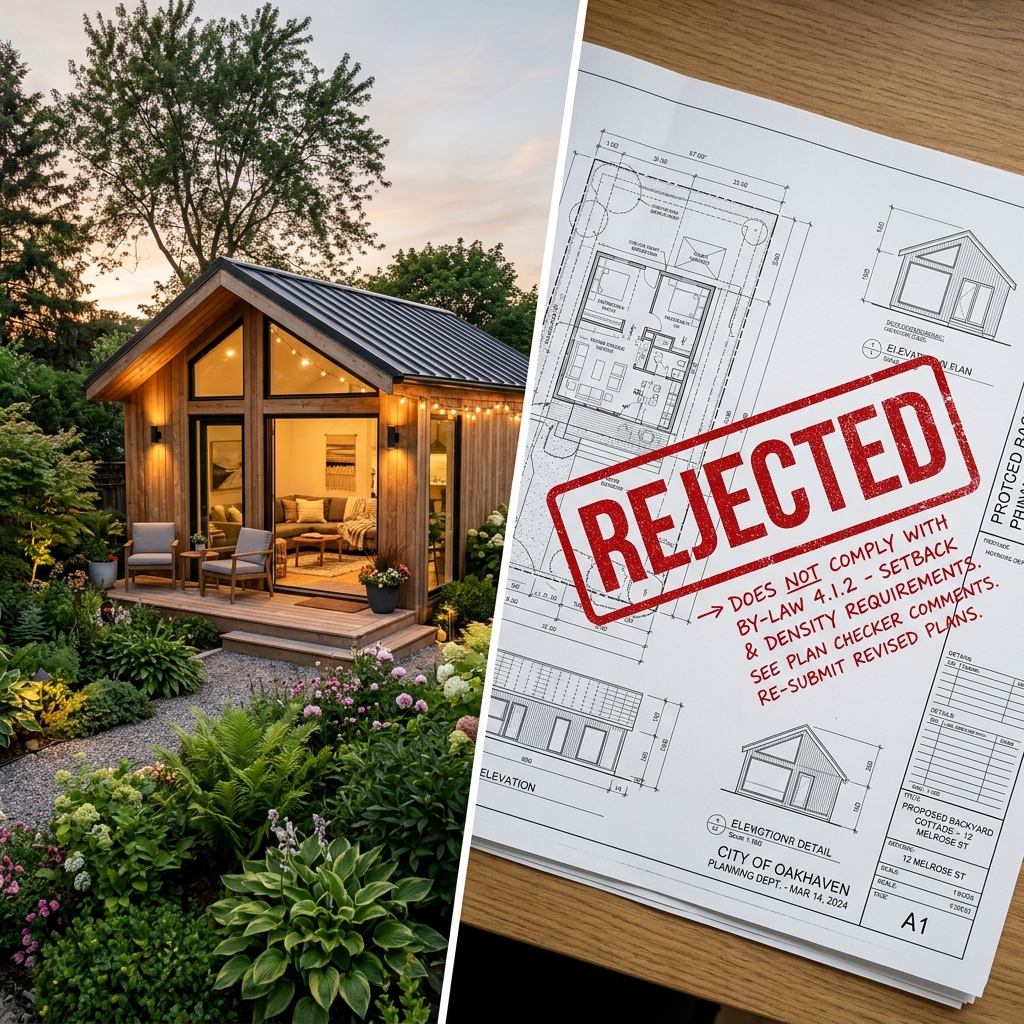
The dream vs. the reality. A Cape Town planning rejection citing height limits, building line breaches, and coverage exceedances is more common than most homeowners expect.
Free property check
Check your erf before you plan a second dwelling
Enter the property address or erf number to start a free check for zoning and erf details.
The "Automatic Right" (And Why It Can Be a Trap)
In many major municipalities, such as the City of Cape Town, changes to municipal planning bylaws have made it easier to build a second dwelling. If your property is zoned as Single Residential 1 (SR1), you often have the "automatic right" to build a second unit without applying for a complex land-use departure.
For a full breakdown of what SR1 zoning means for Cape Town homeowners, see our dedicated guide: SR1 Zoning in Cape Town: What Homeowners Should Know.
However, this automatic right usually comes with strict parameters:
- Size Limits: In many areas, the second dwelling cannot exceed 60 square metres. If you want a larger unit, you must apply for consent use, which triggers public participation and takes months.
- Height Restrictions: The second dwelling must remain subordinate to the main house, typically restricted to a 6-metre wall-plate height.
- Architectural Style: Some municipalities require the secondary unit to match the architectural style of the primary residence.
The Zonely Shortcut: Figuring out your exact zoning category and whether you fall under SR1 can be a frustrating process of navigating municipal portals. You can bypass the red tape by typing your address into our Free Property Check to instantly pull your baseline Erf data.
The Ultimate Dealbreaker: Restrictive Title Deeds
This is where many property owners get caught out. Your Title Deed overrides municipal zoning. Even if the municipality says your SR1 zoning allows a second dwelling, your Title Deed might contain a restrictive condition stating, "Only one dwelling may be erected on this Erf." These restrictions are incredibly common in older suburbs, gated communities, and estates. If this clause exists, you cannot legally build a second unit without hiring a conveyancer to have the restriction formally removed—a process that can cost thousands of Rands and take over six months.
A Zonely Full Report flags these Title Deed conditions upfront so you know before you pay an architect a single rand.
Building Lines, Coverage, and Parking
Even if your zoning permits a second dwelling and your Title Deed is clear, you are still restricted by where you can build on the plot.
- Statutory Building Lines: You cannot simply build right up to your boundary wall. You must respect street and common boundary building lines. Our guide on zoning reports in South Africa explains exactly how building lines are documented.
- Site Coverage: Zoning laws dictate the maximum percentage of your Erf that can be covered by a roof. If your primary house and garage already take up 50% of the plot, you might not have the allowable coverage left for a cottage.
- Parking: Municipalities generally require you to provide additional off-street parking for the new unit.
Start with the Facts, Not Guesswork
Architects and draughtspersons bill by the hour. If you commission plans for an 80-square-metre Airbnb, only to find out later that your Title Deed restricts you to one dwelling or your building lines block the design, you have wasted your money.
Before you make a single property decision, you need the full picture.
Step 1: Run a Free Check to confirm your property boundaries, SG Diagram, and basic zoning category.
Step 2: Upgrade to the Full Zonely Report to uncover the hidden building lines, maximum site coverage, and specific municipal bylaws dictating what you can legally build on your exact Erf.
Arm yourself (and your design team) with the facts before you start.
Get the Full Picture Before You Build
Our Full Report uncovers your building lines, maximum site coverage, and specific bylaws for your exact Erf — so your architect can design with confidence.
Get the Full ReportThinking about a granny flat or second dwelling?
AB+HvD Architects will review your property's zoning and layout, then reply with an honest read on what's feasible — free, no obligation.
Get my free feasibility reviewWe reply personally within one business day.
Want the answer sooner? Get the Full Report (R795) — a full zoning read for your property, usually in your inbox within a few minutes, plus a free 20-minute call with me for any further questions.
Related reading:
AB+HvD Architects
An architecture practice working across Cape Town and Knysna. Hanneke van Deemter is the SACAP-registered architect. Zonely is the practice's free property intelligence tool. abarc.co
Related reading
Municipal Valuation Cape Town: How to Check What the City Says Your Property Is Worth
Every Cape Town property has an official municipal valuation that sets your rates bill - and it's rarely the same as market value. Here's how to check it.
Can I Add a Second Storey to My House in Cape Town?
Adding a floor is the go-to move when ground-floor coverage is maxed out - but it opens a different set of rules: height, storey limits, view conditions, and whether your foundations can carry it. Here's how to work out if it's realistic.
Check your own property while you're here
Enter an address for a free read on its zoning, erf size and building lines. Built and checked by AB+HvD Architects.
Run the free check